







Peer review, acceptance & rejection guides › Why papers get rejected
Every reason on this page comes from real decision letters and reviewer comments that researchers shared anonymously on ScholarsColab. Names, manuscript titles and identifiers were removed before analysis, and the figures update automatically as new feedback is shared (last update 18 October 2026).
The most common reasons for rejection
Share of rejection letters that gave each reason; a letter can give more than one.
Desk rejection vs rejection after peer review
Of 168 decisions shared, 24 (14%) were explicit desk rejections, where the editor declined the manuscript without external review, and 0 (0%) were rejections after peer review. Many other letters do not say which stage the decision came from.
Desk rejections most often cited: out of scope / not a fit (47%); novelty and contribution (40%); methodology and technical quality (20%).
The top reasons, with real examples and how to avoid them
Novelty and contribution
“Editor: In the interest of expediting a decision on your paper, and after careful examination of the submission, the decision has been reached as reject: The article does not have sufficient material in terms of novelty and technical quality that warrant publication in this journal.”
“I do not think it satisfies the requirements of the Aims and Scope in providing novel general advances in robust/nonlinear control or in providing advances in robust control design methodologies.”
How to avoid it: State the contribution in the first paragraph of the introduction and show, with a comparison table, what is new against the latest work.
Out of scope / not a fit
“Editor and Reviewer comments: While your results are of potential interest, the topic of your manuscript falls outside of the scope of this journal.”
“Based on the initianot suitable for this journal Therefore, this paper cannot be further reviewed for publication in this journal.”
How to avoid it: Read the journal’s aims and scope and two or three recent issues before submitting; check that journals publishing similar work exist in the Journal Finder.
High submission volume / priority
“Currently, we receive a high volume of submissions annually and thus need to be very selective of the papers that we can accept for publication.”
“The journal receives many more manuscripts than it can publish, and difficult decisions must be made based on an article's perceived priority.”
How to avoid it: Highly selective journals reject many sound papers for priority; consider a well-matched journal with a realistic acceptance profile.
What reviewers asked for on papers that were accepted
Acceptance rarely comes without comments. In 57 reviewer comments on papers that were later accepted or sent back for revision, reviewers asked most often about:
What reviewers comment on, by research area
| Research area | Comments | Most frequent topics |
|---|---|---|
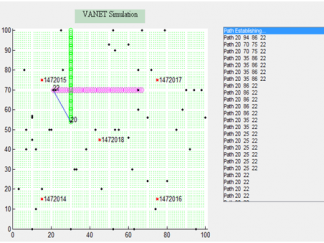
| VANET / Vehicular networks | 86 | figures, tables and equations; literature and references; comparison with recent work |
| Social media popularity prediction | 65 | figures, tables and equations; literature and references; comparison with recent work |
| Wireless sensor networks | 50 | figures, tables and equations; literature and references; language and presentation |
| Human activity recognition | 44 | figures, tables and equations; comparison with recent work; literature and references |
| Cloud and big data scheduling | 24 | experiments and parameters; figures, tables and equations; comparison with recent work |
| Network congestion control | 13 | figures, tables and equations; language and presentation; literature and references |
| Network security | 12 | literature and references; figures, tables and equations; comparison with recent work |
| Privacy preservation | 10 | figures, tables and equations; literature and references; methodology and technical quality |
Before you submit
A pre-submission Manuscript Audit by a PhD reviewer in your area checks a paper against exactly these reasons: scope and fit, novelty, methodology, comparison with recent work, presentation and similarity.
Received a decision or reviewer comments yourself? Share them anonymously to make these findings stronger for everyone.
Frequently asked questions
What is the most common reason papers are rejected?
In the 73 rejection letters shared on ScholarsColab, the most common reason was novelty and contribution, given in 45% of letters, followed by out of scope / not a fit and high submission volume / priority.
What is a desk rejection?
A desk rejection is a decision by the editor not to send a manuscript for external peer review, usually within days or a few weeks. It is most often about scope, fit, novelty or the journal’s priorities rather than detailed flaws.
How can I avoid a desk rejection?
Match the journal’s aims and scope, make the contribution explicit in the abstract and introduction, follow the author guidelines exactly, and check similarity before submitting. A pre-submission manuscript audit can check these points.
Can I submit the same paper to another journal after rejection?
Yes. After a rejection you are free to submit elsewhere. Use the reviewers’ comments to improve the manuscript first, and adapt it to the new journal’s scope and template.