






Elsevier Ltd provides LaTeX templates for many of its journals. Check this journal’s author guidelines, and we can convert your manuscript into its template.
LaTeX Template Conversion →Journals listed in Web of Science and JCR receive many submissions and desk reject a large share. A section-by-section audit by a PhD reviewer in your area shows what to fix first.
Manuscript Auditing →Our experts shortlist up to 5 journals that match your manuscript, indexing requirement and target quartile, and handle the submission.
Journal Selection & Submission →Indexing of Computers and Electrical Engineering
| List | Status |
|---|---|
| Science Citation Index Expanded (SCIE) | ✓ Listed |
| Social Sciences Citation Index (SSCI) | Not found |
| Arts & Humanities Citation Index (AHCI) | Not found |
| Emerging Sources Citation Index (ESCI) | Not found |
| Scopus | ✓ Listed |
| Journal Citation Reports 2024 | ✓ Listed |
- ISSN
- 0045-7906
- eISSN
- 1879-0755
- Publisher
- Elsevier Ltd
- Country
- England
- Language
- English
- Scopus source type
- Journal
- Web of Science categories
- Computer Science, Hardware & Architecture, Computer Science, Interdisciplinary Applications, Engineering, Electrical & Electronic
From the indexing lists used on ScholarsColab, updated 1 March 2026. Indexing can change: confirm on the Web of Science Master Journal List or the Scopus source list before submitting. ScholarsColab does not show impact factors or quartiles, which are licensed; see how JCR and CiteScore quartiles work.
What Computers and Electrical Engineering publishes: real papers
Words that appear most often in the titles of papers our mentors published here:
Papers by ScholarsColab mentors in Computers and Electrical Engineering
- Fog computing for Healthcare 4.0 environment: Opportunities and challenges
 APARNA KUMARI
 - Intelligent transportation system for internet of vehicles based vehicular networks for smart cities
 Dr. Preeti Rani
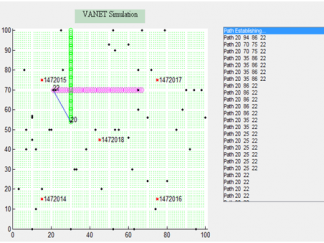
 - Grey wolf optimization based clustering algorithm for vehicular ad-hoc networks
 Farhan Aadil
 - Machine learning-assisted signature and heuristic-based detection of malwares in Android devices
 Prof. Dr. Peer Shah
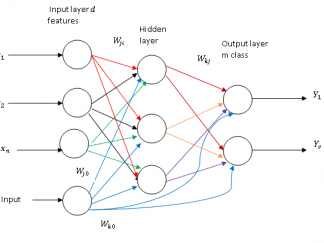
 - Multi-level graph neural network for text sentiment analysis XXiaochun Cheng
- Stability enhancement of multi-machine power systems using ant colony optimization-based static synchronous compensator
 RAJEEV KUMAR
 - Privacy-aware detection framework to mitigate new-age phishing attacks
 Akashdeep Bhardwaj
 - Secure blockchain enabled Cyber-Physical health systems using ensemble convolution neural network classification
 Dr. A. Suresh
 - A hybrid evolutionary weighted ensemble of deep transfer learning models for retinal vessel segmentation and diabetic retinopathy detection
 Dr. Sakshi Arora
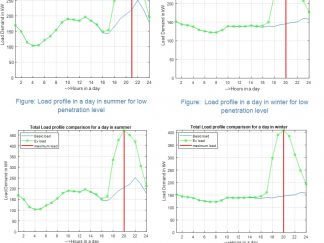
 - Performance assessment of a neuro-fuzzy load frequency controller in the presence of system non-linearities and renewable penetration
 S.K Agarwal
Showing the 10 most cited of 39 papers.
Reviewer comments and rejection reasons for Computers and Electrical Engineering
18 feedback entries shared anonymously by researchers who submitted to this journal. Names and manuscript titles are always removed.
Decisions: acceptance, revision and rejection
What reviewers commented on
Reviewer comments and editor decisions received
- After careful evaluation, I regret to inform you that your manuscript is not suitable for publication in the journal, and I must therefore reject it. We appreciate you submitting your manuscript to Computers and Electrical Engineering and thank you for giving us the opportunity to consider your work.
- Comments from the Editors and Reviewers: Although your manuscript falls within the aim and scope of this journal, it is being declined due to lack of sufficient novelty. We receive a much larger number of papers than we are able to accept.
After careful evaluation, I regret to inform you that your manuscript is not suitable for publication in the journal, and I must therefore reject it. The paper is returned to authors after an editorial review mainly due to one or more of the following reasons: 1) The algorithmic/conceptual/application-related contributions are not sufficiently significant relative to the state-of-the-art (SOTA) li… read more
terature. 2) Comparison is not done or done against old/original algorithms instead of the recent algorithms. 3) The scientific contribution is not clearly presented (this includes poor use of English language) or insufficient in the field of AI. 4) No proper non-parametric statistical analysis has been used to support the results presented. 5) For an application-oriented paper, proper analysis/comparison must be undertaken to explain why the proposed algorithm performs well on the specific problem at hand in comparison to the recently presented methods for solving the same problem (by using any method). 6) Authors need to tune parameters of all methods fairly. Tuned hyper-parameter values should be indicated. If needed, a separate supplemental file can be used. 7) Details of the data used and data partitions should be explained. 8) For an application-oriented paper, proper analysis/comparison must be undertaken to explain why the proposed algorithm should do well on the specific problem at hand in comparison to the best methods for solving the same problem paying attention to the methodologies. Public domain datasets are to be used, if available, so that fair comparisons will be possible. ) As this problem has been actively investigated in the recent past, authors need to compare the results against the best relevant works/results from REPUTABLE sources (including CAEE) tackling the same (and very similar) problem by any method and preferably using public domain benchmarks. This aspect is a major concern.In reviewing your manuscript, I discovered that there are sections which seem to be unoriginal, having appeared in previously published work(s). In this case, the overlap goes beyond the normal occurrence of standard phrases in your field. For this reason, your manuscript cannot be considered for publication. For more information, please refer to the comments below. It is the policy of Computers a… read more
nd Electrical Engineering to publish new and original work. Every manuscript should present some new results or insights and be written in an author's own words. Unless you provide a legitimate explanation for the large amount of textual overlap between your manuscript and the abovementioned previously published work(s), this manuscript will not be reconsidered for publication.- The Limitations of the proposed study need to be discussed before conclusion.
- The authors should consider more recent research done in the field of their study (especially in the years 2021 and 2022 onwards)
A Manuscript Audit by a PhD reviewer in your area checks your paper for the issues reviewers raise most often, before you submit.
Get a Manuscript Audit →Preparing to submit here? Make sure reviewers don't stop at the issues they raise most often. A PhD reviewer in your area can audit your manuscript section by section, and we can convert it into the journal's LaTeX template.
Shared experiences of individual submissions; they do not represent the journal's official policy.
Journals similar to Computers and Electrical Engineering
Journals where our mentors published the closest work to the papers above:
- IEEE AccessSCIEScopusJCR 2024304 mentor papers
- International Journal of Advanced Computer Science and ApplicationsESCIScopusJCR 202438 mentor papers
- NeurocomputingSCIEScopusJCR 20249 mentor papers
- Computers, Materials and ContinuaScopus46 mentor papers
- Multimedia Tools and ApplicationsScopusJCR 202481 mentor papers
- Grenze International Journal of Engineering & Technology (GIJET)Not found in our indexing lists16 mentor papers
Find the right journal for your paper
Is Computers and Electrical Engineering right for your paper? Compare journals
Paste your title, keywords or abstract. We match it against 28,582 journal papers published by PhD researchers on ScholarsColab and show where the closest work appeared, with each journal’s indexing (SCIE, SSCI, AHCI, ESCI, Scopus, JCR 2024).
How it works: no AI or language model is used. Your words are matched against the titles of real published papers by our mentors; journals are ranked by how many closely matching papers they published. Indexing comes from the SCIE, SSCI, AHCI, ESCI, Scopus and JCR 2024 lists, matched by journal name; “not found in our indexing lists” does not prove a journal is unindexed. Always check a journal’s scope and current indexing before submitting.
Frequently asked questions
Is Computers and Electrical Engineering indexed in Scopus?
Yes. Computers and Electrical Engineering appears in the Scopus list, according to the indexing lists used on ScholarsColab (updated 1 March 2026). Always confirm the current status on the official list before submitting.
Is Computers and Electrical Engineering an SCIE journal?
Yes. Computers and Electrical Engineering is listed in the Science Citation Index Expanded (SCIE), according to the indexing lists used on ScholarsColab (updated 1 March 2026). Always confirm the current status on the official list before submitting.
Is Computers and Electrical Engineering in Journal Citation Reports (JCR)?
Yes. Computers and Electrical Engineering is listed in JCR 2024, so it has a Journal Impact Factor. For the current impact factor and quartile, check Journal Citation Reports.
What topics does Computers and Electrical Engineering publish?
Papers by ScholarsColab mentors in Computers and Electrical Engineering most often mention system, network, detection, learning, algorithm, neural. Check the journal’s aims and scope for its full coverage.
Have ScholarsColab mentors published in Computers and Electrical Engineering?
Yes. 39 papers by 27 mentors were published in Computers and Electrical Engineering between 2014 and 2026, with 2,018 citations in total.
What do reviewers at Computers and Electrical Engineering comment on most?
In 15 reviewer comments and decisions shared anonymously by researchers on ScholarsColab, the most frequent topics were novelty and contribution; comparison with recent work; and literature and references. See the comments on this page for examples.
Why are papers rejected by Computers and Electrical Engineering?
In 4 rejection decisions shared anonymously by researchers on ScholarsColab, the reasons given most often were novelty and contribution; high submission volume / priority; and methodology and technical quality. A pre-submission manuscript audit can check a paper for these issues.
What is the acceptance rate of Computers and Electrical Engineering?
The official acceptance rate is published by the journal or its publisher, so check the journal's website. Among 4 decisions shared anonymously by researchers on ScholarsColab, 0 were accepted, 0 received a revision request and 4 were rejected; this small sample is not the journal's official rate.
Want a PhD expert to choose the journal with you?
Our Journal Selection & Submission service shortlists up to 5 journals that match your manuscript, indexing requirement and target quartile, and handles the submission. If your paper was rejected before, a Manuscript Audit shows what to fix first.