






Home › Research Methodology › Experimental vs Quasi-Experimental Design
Below, we explain both designs in plain language, describe common quasi-experimental set-ups, and use live data from PhD researchers on ScholarsColab to show where experiments and simulations appear in real research.
True experiment vs quasi-experiment at a glance
| True experiment | Quasi-experiment | |
|---|---|---|
| Random assignment | Yes | No |
| Control group | Yes | Usually, but groups may differ at the start |
| Researcher controls the treatment | Yes | Often, or uses a change that happened naturally |
| Evidence for cause and effect | Strong | Moderate; alternative explanations must be ruled out |
| Typical setting | Laboratories, clinical trials | Schools, hospitals, organisations, policy changes |
The parts of an experiment
- Independent variable: the factor the researcher changes (for example the dose, temperature or teaching method).
- Dependent variable: the outcome measured.
- Control group: the comparison that does not receive the change.
- Random assignment: the step that makes the groups alike at the start.
- Controlled conditions: everything else kept the same.
Common quasi-experimental designs
| Design | How it works | Example |
|---|---|---|
| Non-equivalent groups | Compare an existing group that receives the treatment with a similar group that does not | Two classes, one taught with a new method |
| Pre-test / post-test with comparison | Measure both groups before and after the treatment | Productivity in two factories before and after training in one |
| Interrupted time series | Many measurements before and after a change | Monthly accident rates before and after a new traffic law |
| Natural experiment | An event outside the researcher’s control creates the groups | Districts that did and did not receive a new policy |
Example: reading real experimental studies
To explain the two designs, we use real experimental studies published by PhD researchers on ScholarsColab. Our data: 41,792 papers, mostly published between 1998 and 2026, by 967 ScholarsColab mentors (data updated 15 October 2026).
Step 1
Pick a real experimental study. These studies by our mentors each changed something and measured what happened (the selection changes every day):
| Published paper | Year | Citations |
|---|---|---|
| Design, synthesis, and in vitro antiplasmodial activity of 4-aminoquinolines containing modified amino acid conjugates Dr. Pooja Agarwal | 2016 | 12 |
| In vitro antioxidant and cytotoxicity studies of Curcuma amada Roxb.(Mango ginger) Prof.Dr.R.Udayakumar | 2014 | 11 |
| Studies on in vitro antioxidant and antistaphylococcal activities of some important medicinal plants Bechan Sharma | 2011 | 155 |
| Fighting arboviral diseases: low toxicity on mammalian cells, dengue growth inhibition (in vitro), and mosquitocidal activity of Centroceras clavulatum-synthesized … Dr. P. Madhiyazhagan | 2016 | 108 |
| Alteration in chloroplast structure and thylakoid membrane composition due to in vivo heat treatment of rice seedlings: correlation with the functional changes Prof. P. Pardha Saradhi | 2001 | 97 |
Step 2
Find what was changed and what was measured. What was changed is the independent variable (for example, a material, a temperature or a treatment). What was measured is the dependent variable (for example, strength, efficiency or recovery).
Step 3
Ask how the groups were formed. If samples or participants were assigned to groups at random, it is a true experiment. If the researcher used groups that already existed, such as two classes or two factories, it is a quasi-experiment.
Step 4
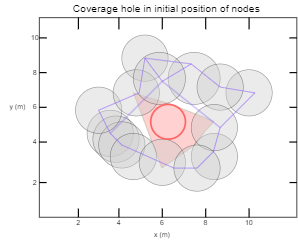
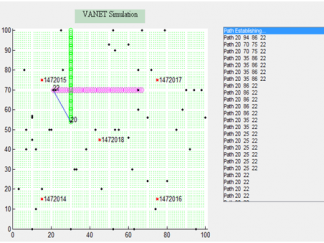
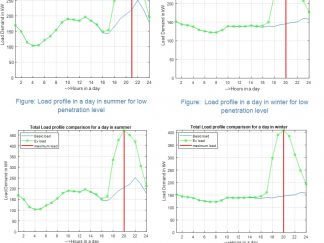
Remember virtual experiments. 738 of the 41,792 papers in our data (1.8%) show this in their title: simulation / modelling. It is most common in Physical sciences & mathematics, where 4.4% of papers show it. In engineering and the physical sciences, a computer model often replaces a physical experiment: the researcher changes one input at a time and measures the output, with the same logic as a laboratory experiment.
How to design an experiment or quasi-experiment
- State the hypothesis, naming the independent and dependent variables.
- Decide whether random assignment is possible. If yes, plan a true experiment; if not, choose a quasi-experimental design.
- Choose a comparison group that is as similar as possible to the treatment group.
- Measure before and after where you can, to account for starting differences.
- Keep all other conditions constant, and record any that change.
- Plan the analysis, including how you will adjust for differences between non-random groups.
Common mistakes reviewers point out
- Calling a quasi-experiment a randomised experiment.
- Ignoring starting differences between non-random groups.
- Changing more than one factor at a time, so the cause of an effect is unclear.
- Too few replicates or participants to detect a real effect.
- Over-trusting simulation results without validating the model against real measurements.
Frequently asked questions
What is the difference between an experimental and a quasi-experimental design?
Both compare groups that do and do not receive a treatment. In a true experiment participants are assigned to groups at random; in a quasi-experiment they are not, so the groups may differ at the start.
Why use a quasi-experimental design?
Quasi-experiments are used when random assignment is impossible, impractical or unethical, for example when studying the effect of a policy, a school programme or a hospital procedure on existing groups.
What is random assignment?
Random assignment means using a chance process, such as a random number generator, to decide which participants receive the treatment. It makes the groups alike in both known and unknown characteristics.
Is a simulation study an experiment?
A simulation study applies experimental logic, changing inputs and measuring outputs, but in a computer model rather than the real world. Its conclusions depend on how well the model represents reality.
What is a natural experiment?
A natural experiment uses an event outside the researcher’s control, such as a new law or a natural disaster, that affects some groups and not others, creating a comparison similar to an experiment.
Use this data in your own work
ScholarsColab (2026). ScholarsColab Research Methods Index [Data set]. Vidhilekha Soft Solutions Pvt Ltd. Retrieved 15 October 2026, from https://scholarscolab.in/research-methodology/. Licensed under CC BY 4.0.Download the data (CSV) →Need help applying this to your research?
Discuss your research problem with a PhD mentor, hand the whole project to a research project manager, or post your project and let matched experts apply.
Mentors whose published work uses this approach:
 Dr. Manoj Ramesh GawareM.V.P. Samaj's G. M. D. arts, B. W. Commerce and Science College Sinnar6 related papers · View profile →
 M V A RAJU BAHUBALENDRUNINIT Puducherry 5 related papers · View profile →
 Dr Muhammad AtifUniversity of Education Pakistan5 related papers · View profile →
 DR. Fahim ullahJiangsu university 5 related papers · View profile →